 9160514747 | 6281024537
 rameshmicroscopedentalclinic@gmail.com
 #17/112, Near R.T.C. Bus Stand, Ganugakottu Road, Opp. Abhimanyu Towers, Edepalli, Machilipatnam - 521001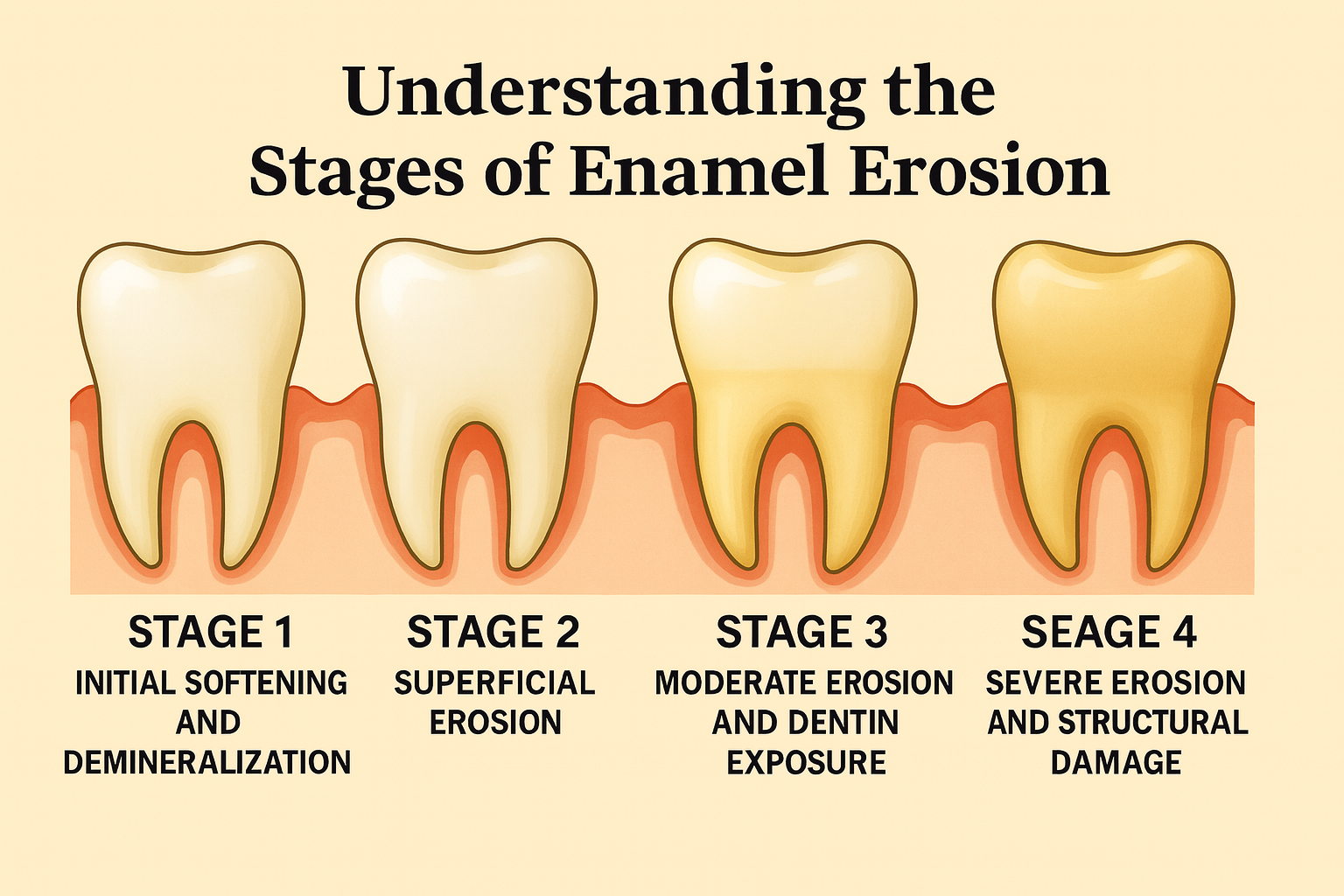
The Silent Threat: Understanding the Stages of Enamel Erosion
Our teeth are incredible structures, designed to last a lifetime. But even these powerhouses have a weak spot their outer shield, the enamel. Enamel, the hardest substance in the human body, is a marvel of nature, protecting the softer, sensitive layers beneath from the daily onslaught of chewing, biting, and temperature changes. However, it's not invincible. Acid, the archenemy of enamel, can slowly but surely wear it down, leading to a condition known as enamel erosion.
Enamel erosion is a growing concern, affecting people of all ages. It's a progressive problem, meaning it gets worse over time if not addressed. Understanding the different stages of enamel erosion and, more importantly, implementing effective preventive methods is crucial for maintaining a healthy, functional, and beautiful smile. If you're concerned about the health of your enamel, or simply looking for comprehensive dental care, finding the best dental hospital in Machilipatnam should be a top priority.
What Exactly is Enamel Erosion?
Unlike tooth decay, which is caused by bacteria producing acid, enamel erosion is primarily caused by direct acid exposure from non-bacterial sources. Think about the fizzy drinks, fruit juices, and even certain medical conditions that introduce acid into your mouth. This acid dissolves the minerals in your enamel, softening it and making it more susceptible to wear and tear. Over time, this loss of mineral content weakens the enamel, making your teeth more vulnerable to sensitivity, decay, and even structural damage.
Many people don't realize they have enamel erosion until it reaches a more advanced stage, as the initial symptoms can be subtle. This is why regular dental check-ups are so important. A skilled dentist can spot the early signs of erosion and guide you on the path to prevention. When you’re seeking expertise, consider visiting the best dental hospital in Machilipatnam for a thorough assessment.
The Stages of Enamel Erosion
Enamel erosion doesn't happen overnight. It's a gradual process, often categorized into distinct stages, each with its own characteristics and potential implications.
Stage 1: Initial Softening and Demineralization
This is the earliest and often most overlooked stage. At this point, the acid has begun to attack the surface of the enamel, causing demineralization. This means that essential minerals like calcium and phosphate are being leached out of the enamel structure.
What's happening: The enamel surface becomes slightly softer and more porous. It might appear duller than usual, losing some of its natural luster.
Symptoms: Often, there are no noticeable symptoms at this stage. You might experience very mild, transient sensitivity to extreme temperatures, but it's usually not significant enough to raise alarm bells.
Detection: Only a dentist can typically identify enamel erosion at this early stage through visual examination and sometimes with the aid of diagnostic tools. If you are in the region and looking for expert opinions, the best dental hospital in Machilipatnam will have the diagnostic tools and experienced professionals to detect these subtle changes.
At this stage, the enamel can often be re-mineralized with proper care, such as fluoride treatments and improved oral hygiene practices. It's a critical window for intervention.
Stage 2: Superficial Erosion
As acid exposure continues, the demineralization becomes more pronounced, leading to visible changes in the enamel.
What's happening: The outer layer of enamel starts to wear away. Your teeth might look smoother, losing their natural texture. Small indentations or “cupping” on the biting surfaces of your molars might become visible, particularly on teeth that bear the brunt of chewing.
Symptoms: Sensitivity becomes more frequent and noticeable, especially when consuming hot, cold, sweet, or acidic foods and drinks. The edges of your teeth, particularly your front teeth, might appear more translucent or “glassy.”
Detection: A dentist can easily spot these changes. They might also note a slight yellowing of the teeth, as the underlying dentin starts to show through the thinning enamel.
Early intervention at this stage is still highly effective in preventing further damage and managing sensitivity.
Stage 3: Moderate Erosion and Dentin Exposure
This stage signifies a more significant loss of enamel, with the possibility of the underlying dentin becoming exposed.
What's happening: The erosion has progressed deeper, leading to noticeable changes in tooth shape and color. Teeth may appear shorter, rounded, or “worn down.”
Symptoms: Sensitivity is a major issue at this stage, often persistent and uncomfortable.
Detection: The visual signs are quite clear to both the patient and the dentist. Treatment strategies will become more involved, aiming to protect the exposed dentin and rebuild the tooth structure.
Stage 4: Severe Erosion and Structural Damage
This is the most advanced stage of enamel erosion, where the structural integrity of the tooth is compromised.
What's happening: A substantial amount of enamel has been lost, exposing large areas of dentin.
Symptoms: Extreme sensitivity is common, making eating and drinking a painful experience.
Detection: The damage is unmistakable and may require advanced treatments such as crowns or root canal therapy.
Preventive Methods
By understanding its causes and adopting proactive habits, you can significantly reduce your risk and protect your precious enamel.
Limit Acidic Foods and Drinks
- Reduce sodas, energy drinks, juices, citrus fruits, vinegar-based foods.
- Consume acidic items during meals.
- Use a straw to reduce contact with teeth.
- Rinse with water after acidic foods.
Wait Before Brushing
The golden rule: Wait at least 30–60 minutes after consuming acidic items before brushing.
Choose the Right Toothpaste and Brush
- Use fluoride toothpaste.
- Use a soft-bristled brush.
- Brush gently with circular motions.
Increase Saliva Flow
- Chew sugar-free gum.
- Drink plenty of water.
Address Underlying Medical Conditions
- Get treatment for acid reflux (GERD).
- Seek help for eating disorders involving vomiting.
- Treat dry mouth conditions.
Regular Dental Check-ups
Routine check-ups help detect early erosion and provide preventive care. Visiting the best dental hospital in Machilipatnam ensures expert guidance and modern diagnostic support.
Consider Dental Restorations for Advanced Cases
- Bonding – covers eroded areas.
- Veneers – restore appearance.
- Crowns – protect and strengthen damaged teeth.
The Takeaway
Enamel erosion is a real and progressive threat to your oral health. By understanding its stages and committing to preventive measures, you can safeguard your smile. For those in Machilipatnam, seeking care from the best dental hospital ensures expert attention and long-term protection for your teeth.
 Emergency No. : (+91) 9160514747